
Severe Atelectasis Following Total Hip Replacement Surgery: A Case for Novel Combined Modalities
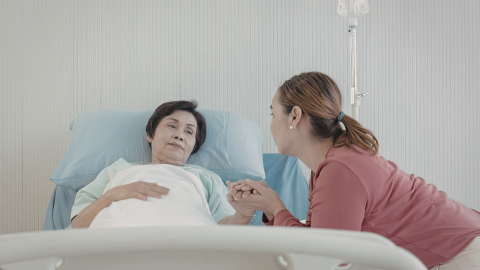
Severe Atelectasis Following Total Hip Replacement Surgery: A Case for Novel Combined Modalities
This course includes
The instructors
Overview
Postoperative pulmonary complications (PPCs) remain a major contributor to morbidity, mortality, and prolonged hospital stays following surgery. In this clinically rich case presentation, Judy K. explores severe atelectasis following total hip replacement surgery and demonstrates how novel combined therapeutic modalities can rapidly improve patient outcomes.
Using the case of a 66-year-old patient with multiple risk factors, including obesity, smoking history, and surgical positioning, this session examines:
-
The mechanisms of postoperative atelectasis
-
Why standard interventions may be insufficient
-
How to apply high-level clinical reasoning to complex respiratory presentations
-
How combining lung recruitment, airway clearance, and positioning strategies can transform recovery
This course challenges clinicians to think critically about postoperative respiratory decline and to implement targeted, evidence-informed interventions with confidence.
Learning Objectives
By the end of this course, participants will be able to:
-
Define postoperative pulmonary complications (PPCs) and describe their clinical and system-level impact.
-
Identify the primary mechanisms of atelectasis (compression, contraction, airway obstruction).
-
Recognize patient-specific risk factors for severe postoperative atelectasis.
-
Understand the physiological requirements for effective lung recruitment.
-
Apply positive pressure techniques safely and effectively in postoperative patients.
-
Integrate multimodal strategies including breath stacking, oscillation, and positioning.
-
Critically evaluate assumptions regarding spinal versus general anesthesia and respiratory risk.
-
Develop individualized, dynamic treatment plans based on evolving patient presentation.
Audience
This course is designed for:
-
Physiotherapists working in acute care and hospital settings
-
Cardiorespiratory physiotherapists
-
ICU clinicians
-
Rehabilitation professionals managing postoperative patients
-
Healthcare providers involved in surgical recovery pathways
Why This Course Matters
Postoperative pulmonary complications can increase hospital stays by up to 15 days and significantly elevate 30-day mortality risk. Atelectasis - partial or complete lung collapse - is common after major surgery, yet severe cases require precise, high-level intervention.
Key clinical insights include:
-
Mechanisms matter. Compression from abdominal contents and airway obstruction from retained secretions demand different but complementary interventions.
-
Positioning is powerful. Reverse Trendelenburg and diaphragmatic offloading can significantly improve lung expansion.
-
Intensity matters. Re-expanding collapsed alveoli may require sustained positive airway pressures (~40 cm H₂O), which most postoperative patients cannot generate independently.
-
Multimodal therapy works. Combining breath stacking, one-way valve systems, mechanical vibration, and targeted positioning enhances recruitment and secretion clearance.
-
Individualization is essential. Effective treatment requires continuous reassessment and adjustment based on patient response.
This session equips clinicians to move beyond routine breathing exercises and toward structured, evidence-informed lung recruitment strategies that improve recovery trajectories.
About the Presenter
Judy K. is an experienced clinician and educator in cardiorespiratory physiotherapy. Her work emphasizes advanced clinical reasoning, evidence-based intervention, and interdisciplinary collaboration to improve outcomes in complex postoperative cases.
As a member of the Cardiorespiratory Division (CRD) of the CPA, she has had ongoing involvement with national cardiorespiratory issues, including participation with the CPA Specialization pilot in 2010.
In 2012, she achieved the Clinical Specialist designation for Cardiorespiratory; one of the first three PTs in Canada to successfully complete the program for this area. She has also continued her involvement with the program as one of the assessors.
The instructors

Material included in this course
-
Course Materials
-
Welcome
-
Severe Atelectasis Following Total Hip Replacement surgery - A Case for Novel Combined Modalities
-
Summary and Key Insights
-
Feedback
I'm a member of the Canadian Physiotherapy Association (CPA). What are the discounts available to CPA Members on Embodia?
As part of our partnership with the CPA, we offer its members discounts on courses and Embodia Memberships. Learn more about the partnership on this page.
In order for the discount to be applied, you first need to authenticate your CPA membership. This is an important step as this is how Embodia 'knows' that you are a CPA member.
To authenticate as a CPA member, please visit this page on the CPA portal.
Please note that your email address on your CPA account must match your email address on Embodia. If needed, you can update your information on Embodia as outlined in this guide.
Is a certificate of completion included with this course?
Once you have completed the course, a certificate of completion (including learning hours and course information) will be generated. You can download this certificate at any time. To learn more about course certificates on Embodia please visit this guide.
This can be used for continuing education credits, depending on your professional college or association. If this course has been approved for CEUs in specific jurisdictions, it will be noted on the course page and CEU information may be added to your course certificate. Please read this guide for more information.