
Foundational Aquatic Therapy
Foundational Aquatic Therapy
This course includes
The instructors
This is the updated version of the Foundational Aquatic Therapy course.
It includes refreshed content, improved structure, and updated clinical insights from Alison Bonnyman. If you previously completed the earlier version of this course, you may still benefit from reviewing this updated material. Looking for the original version of this course? You can still access it here.
Overview
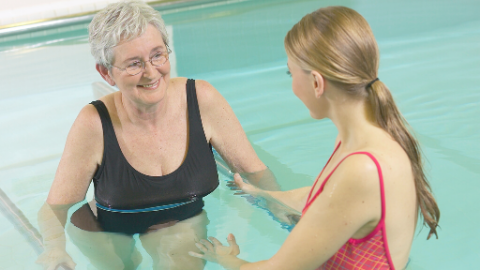
Foundational Aquatic Therapy is a comprehensive introduction to the principles, physiology, and clinical application of aquatic physical therapy. Presented by Alison Bonnyman, aquatic physical therapist and founder of Canadian Aquatic Rehab, this Embodia course explores how water’s unique properties can be leveraged to enhance rehabilitation outcomes safely and effectively.
Participants will develop a strong understanding of hydrodynamic principles, immersion physiology, and evidence-informed intervention design. The course explains how buoyancy, hydrostatic pressure, viscosity, drag, turbulence, and thermal effects influence movement, neuromuscular activation, cardiovascular function, and pain modulation.
Through practical examples and clinical reasoning, practitioners will be introduced to the concepts of:
-
Safely implement graduated weight-bearing programs
-
Reduce joint load while promoting functional mobility
-
Enhance motor learning and neuroplasticity
-
Design aquatic therapy sessions for strength, balance, endurance, and confidence
Aquatic therapy is presented not as a passive modality, but as a dynamic, task-oriented rehabilitation environment that supports central nervous system plasticity and functional recovery across the lifespan.
Learning Objectives
By the end of this course, participants will be able to:
-
Explain the hydrodynamic principles of buoyancy, hydrostatic pressure, viscosity, drag, and turbulence.
-
Describe the physiological effects of water immersion on cardiovascular, respiratory, neuromuscular, and hormonal systems.
- Identify precautions and contraindications to ensure safe aquatic therapy practice.
-
Apply graduated weight-bearing concepts to reduce joint compression and facilitate early movement.
-
Design aquatic therapy interventions that target balance, strength, trunk activation, and cardiovascular conditioning.
-
Modify water temperature and immersion depth to optimize therapeutic outcomes.
Audience
This course is designed for healthcare professionals who incorporate or are considering incorporating aquatic therapy into clinical practice, including:
-
Physical Therapists
-
Occupational Therapists
-
Kinesiologists
-
Rehabilitation Assistants
-
Recreation Therapists
-
Other movement and rehabilitation professionals
Both clinicians new to aquatic therapy and those seeking a stronger physiological foundation will benefit.
Why This Course Matters
Aquatic therapy offers a powerful alternative environment for rehabilitation - one that enables movement earlier, safer, and often with less pain.
At collarbone immersion, buoyancy can reduce effective body weight by up to 85%, allowing earlier mobilization following surgery or during arthritic flare-ups. Hydrostatic pressure enhances venous return and lymphatic drainage while increasing the work of breathing, offering both cardiovascular and respiratory training effects. Water’s viscosity provides omnidirectional, velocity-dependent resistance, allowing for safe, isokinetic strengthening across all planes of motion.
Thermal modulation further expands clinical utility:
-
Warm water promotes relaxation, reduces spasticity, improves collagen extensibility, and dampens pain perception.
-
Cooler water supports higher-intensity training and benefits heat-sensitive conditions such as multiple sclerosis.
For patients, aquatic therapy improves confidence, reduces fall risk, and increases engagement.
For clinicians, it reduces physical strain while allowing rapid progression or regression of exercises through simple adjustments in speed, surface area, or immersion depth.
With growing evidence supporting its physiological and functional benefits, aquatic therapy is an essential competency for modern rehabilitation professionals.
The instructors

BScPT, MScRS
Alison Bonnyman is a physiotherapist of 40+ years. She attained an MSc in Rehabilitation Science at McMaster University researching aquatic therapy and osteoporosis. She has completed extensive international training in aquatic therapy, presented her research at international conferences, and is a provider of aquatic therapy, using community pools.
Alison is the founder of Canadian Aquatic Rehab. She lectures, consults, and teaches aquatic therapy across Canada.
Material included in this course
-
Lecture Videos
-
Welcome and Slides
-
Aquatic (Physical) Therapy (APT)
-
Hydrodynamics
-
Short-term Physiological Adaptations of Immersion
-
Routine Precautions
-
The Aquatic Advantage
-
Techniques
-
Cardiovascular
-
Equipment
-
Pool Health
-
Feedback
-
Practical Techniques
-
Bad Ragaz: Horizontal Peripheral Resistance
-
Bad Ragaz with Rib Hold
-
Balance in Stillness
-
Passive Cradling
-
Resisted Trunk Extension
-
Seaweed
-
Trunk Flexion/Extension
-
Using Drag
-
Wonder Boards
-
Feedback
-
Summary and Quiz
-
Summary and Key Insights
-
Knowledge Check Quiz
Patient exercises included in this course
-
Sit to Stand with Noodle
-
Gluteal Strengthening
-
Dynamic Sitting Balance
-
Cardiovascular Kicking
-
Single Leg Balance
-
Dynamic Sitting Balance: Legs Only
-
Opening Sequence with Breath
-
Tandem Walking
-
Lunge Walking
-
Head Control Exercise in the Water
-
Isometric Trunk Work in the Water
-
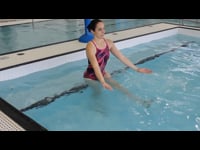
Sit to Stand in the Water
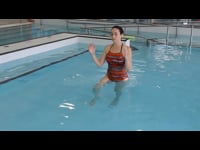
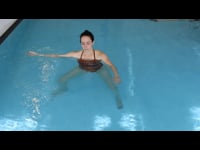
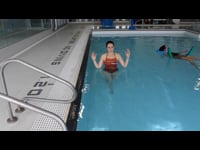
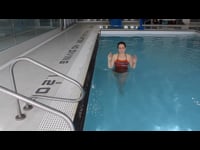
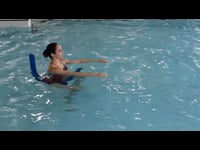
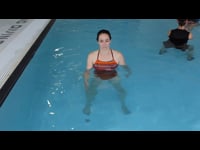
Patient education included in this course
-
Warm vs. Cool Water: What’s the Difference?
-
Why Moving in Water Feels Easier
-
What Is Aquatic Therapy?
Is a certificate of completion included with this course?
Once you have completed the course, a certificate of completion (including learning hours and course information) will be generated. You can download this certificate at any time. To learn more about course certificates on Embodia please visit this guide.
This can be used for continuing education credits, depending on your professional college or association. If this course has been approved for CEUs in specific jurisdictions, it will be noted on the course page and CEU information may be added to your course certificate. Please read this guide for more information.
This course has exercises. Can I prescribe them to my patients?
Yes, exercises included in courses or resource packages on Embodia can be prescribed directly through the Embodia platform. A Tier 2 or 3 Membership is required to prescribe exercises. These memberships include a range of other features. You can learn about home exercise programs (HEP) on Embodia here, and about memberships on Embodia here.
This course has patient education. Can I share it with my patients?
Yes, patient education included in courses or resource packages on Embodia can be shared directly through the Embodia platform. A Tier 2 or 3 Membership is required to share education. These memberships include a range of other features. You can learn about patient education on Embodia here, and about memberships on Embodia here.